

Madrid, Spain’s vibrant capital, offers a rich blend of history, culture, and modern attractions. I spent three days visiting Madrid – the majestic city – and was quick to see its beauty, hear the chatter of families, friends, and other tourists, and feel its rich culture and stunning architecture.

MUSEUMS


What Museums should you visit in Madrid, Spain?
Madrid, Spain, is home to one of the world’s most impressive art collections, largely centered on the famous “Golden Triangle of Art” (Triángulo del Arte), which features three world-class museums within a short walk from each other. The Golden Triangle of Art includes:
- Museo Nacional del Prado:
Showcases: European art from the 12th to the early 19th centuries.
What to see? Masterpieces by Spanish masters like Velázquez (Las Meninas), Goya (The Third of May 1808), and El Greco. - Museo Nacional Centro de Arte Reina Sofía:
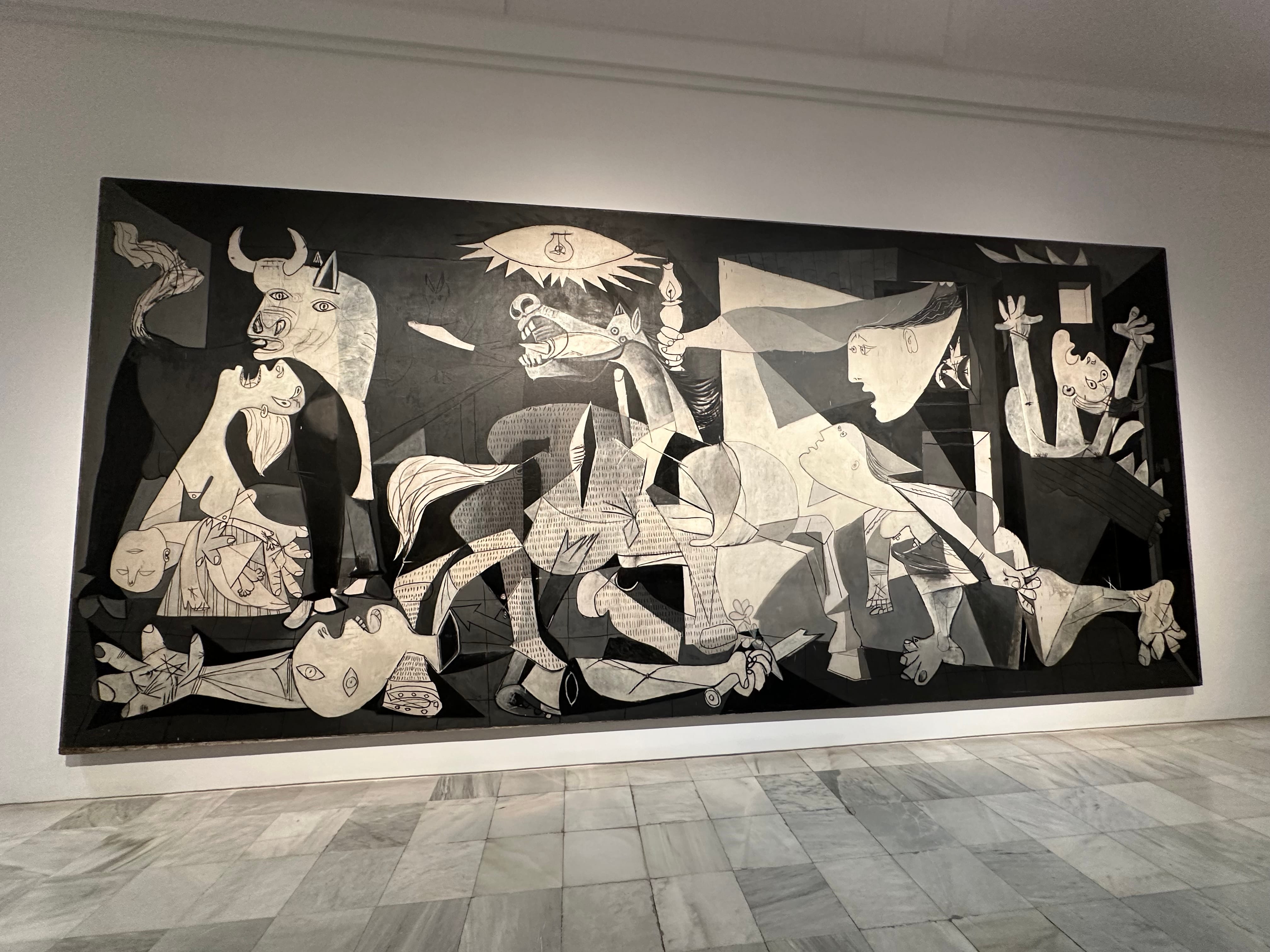
Showcases: Spanish 20th-century art (Modern and Contemporary).
What to see? Home to Pablo Picasso’s monumental anti-war masterpiece, “Guernica,” as well as key works by Salvador Dalí (such as The Great Masturbator) and Joan Miró. - Thyssen-Bornemisza National Museum:
Showcases: An extensive private collection spanning from the 13th to the 20th century.
What to see? Acts as a perfect bridge between the classical Prado and the modern Reina Sofía, featuring works from the Renaissance, Impressionism, Post-Impressionism, and Pop Art.

WHERE TO GO TO SEE MADRID’S HISTORY
Madrid is rich with history, and many of its most important landmarks are conveniently located within walking distance of each other in the city center. Here are the absolute historic landmarks you should prioritize on your first trip to Madrid:
Royal Palace of Madrid (Palacio Real de Madrid)
As the official residence of the Spanish Royal Family, this is the largest royal palace in Western Europe. While the current royal family doesn’t live there, it is used for state ceremonies.
Historical Fact: The land the palace sits was a fortress for the Moorish city of Mayrit. The current palace was built in the 18th century after a fire destroyed the former Royal Alcázar.
Almudena Cathedral (Catedral de Santa María la Real de la Almudena)
The cathedral is located directly across from the Royal Palace. While the palace is pomp and circumstance, the cathedral is noticeably more modern (completed in 1993). It’s the perfect contrast, with its blend of a Neoclassical façade, a Neo-Gothic interior, and a Neo-Romanesque crypt.
Historical Fact: The Almudena Cathedral stands on the site of an ancient mosque believed to have existed during the Moorish period.
Plaza Mayor
The Plaza Mayor is the magnificent, historic heart of Madrid. Inaugurated in 1620, this vast, rectangular building has served as the city’s central stage for centuries, hosting a range of events, from markets and bullfights to public trials during the Spanish Inquisition. Today, it remains a lively cultural hub, framed by stunning historic architecture, such as the brightly painted Casa de la Panadería, and featuring a bronze statue of King Philip III. With its charming cafes and street performers, the Plaza Mayor perfectly captures the vibrant, enduring spirit of Madrid.
Puerta del Sol
One of Madrid’s most famous plazas, the Puerta del Sol (Gate of the Sun) is the center of the city and Spain. How can you tell? There’s a plaque on the ground with “Km 0.” Puerta del Sol also features the famous statue, El Oso y el Madroño (The Bear and the Strawberry Tree), which is the symbol of Madrid, as well as the Real Casa de Correos building.

Madrid, Spain’s Notable Monuments & Sites
Puerta de Alcalá
A grand neoclassical gate built in 1778, predating the Arc de Triomphe in Paris. It was one of the five ancient entrances to the city. It stands proudly in the Plaza de la Independencia.
Temple of Debod (Templo de Debod)
Dating back to the 2nd century B.C., this authentic Egyptian temple was dismantled and given to Madrid’s Cuartel de la Montaña Park as a gift to Spain. The Temple is renowned for one of the city’s most beautiful sunset views, often silhouetting the Royal Palace and Almudena Cathedral against the horizon.
My brother and I loved it! However, it’s free, so be prepared to wait in line.

Atocha Station (Estación de Atocha)
Atocha Station (Estación de Atocha) is both Madrid’s busiest railway hub and a magnificent historic landmark. This 19th-century structure, characterized by its grand iron-and-glass dome, features a vibrant tropical garden that offers a serene, distinctive contrast to the surrounding hustle and bustle of travel. It truly stands as a gateway, connecting travelers to the city’s rich history and modern energy.
One of the most gorgeous train stations I have ever seen!

What food is Madrid known for and where should people eat?
Madrid’s cuisine is built on hearty, traditional dishes that reflect its history as a landlocked capital, offering comforting stews, iconic sandwiches, and essential tapas. Here is a guide to the most famous foods and the best places to try them.
Cocido Madrileño
The signature dish of Madrid, this is a very rich, three-course stew traditionally served for lunch. It consists of a flavorful broth (the first course, served with noodles), followed by chickpeas and vegetables (the second course), and finally, various meats, including beef, chorizo, and pork belly (the final course). It is a perfect dish for the cooler months.
Where to Eat It:
- La Bola: A legendary tavern that has been serving cocido since 1870. They prepare the stew using a unique method: slow-cooked for over four hours in individual clay pots over oak-wood embers, imparting a distinct smoky flavor.
- Malacatín: Another centennial restaurant in the La Latina neighborhood, famous for preserving the strict tradition of serving the cocido in all three separate courses (tres vuelcos).
Bocadillo de Calamares
The unofficial street food of Madrid, despite the city being far from the coast. It is a deceptively simple sandwich made of crispy, deep-fried calamari rings (squid) piled high on a fresh, crusty baguette. Locals usually enjoy it with just the fried squid, though some may add a squeeze of lemon.
Where to Eat It:
The area around Plaza Mayor is the epicenter for this sandwich, where a friendly rivalry exists among a cluster of bars:
- Cervecería La Campana and La Ideal: These two neighboring spots are universally acclaimed by locals and travelers as offering some of the best and most authentic versions of the bocadillo de calamares.
- El Brillante: Located opposite Atocha train station, this large bar is known for serving thousands of these sandwiches every day.
Churros con Chocolate
What it is: A classic Spanish treat—long, fried dough pastries (churros or the thicker version, porras) served with a cup of luxuriously thick, dense hot chocolate that is meant for dipping. It is enjoyed for breakfast, an afternoon snack (merienda), or a late-night bite after a night out.
Where to Eat It:
Chocolatería San Ginés: Open 24 hours a day, this is the world’s most famous churrería, serving churros and chocolate since 1894. Located in a hidden alleyway near Puerta del Sol, it’s a must-visit. I’ve had these churros, and can confirm – they are unbelievably yummy.
Tortilla Española (Spanish Omelet)
What it is: The staple of Spanish cuisine—a thick omelet made with slow-cooked potatoes and eggs, often including caramelized onions. In Madrid, you’ll find a wide range, from fully set to deliciously runny inside.
Where to Eat It:
- Casa Dani: Located inside the Mercado de la Paz, their tortilla is consistently praised as one of the best in the city for its pure, traditional flavor.
- Bodega de la Ardosa: A beautiful, historic tavern known for its excellent pincho de tortilla. This Madrid restaurant is also well known for its tapas!
Huevos Rotos (Broken Eggs)
What it is: A simple but satisfying dish of crispy fried potatoes topped with perfectly cooked fried eggs. The magic happens when the eggs are “broken,” and the runny yolks mix with the potatoes and slices of high-quality cured ham (jamón ibérico) or chorizo.
- Taberna El Sur: Known for its generous portions and excellent, traditional version of huevos rotos served over crisp, golden potatoes.
- Casa Lucas: Highly-rated for a variety of traditional tapas, including this dish.
Common FAQs about Madrid, Spain.
Is Madrid a Walkable City?
Absolutely, Madrid is an exceptionally walkable city. Most of the major historic landmarks, museums, and key attractions are clustered within the central districts, making it easy and enjoyable to explore on foot.
🚶 Walkability and Transportation
Central Layout: The core of Madrid, including the “Golden Triangle of Art” (Prado, Reina Sofía, Thyssen), Puerta del Sol, and Plaza Mayor, are all easily accessible by walking.
Metro Alternative: For longer distances or when walking becomes too much, Madrid boasts an efficient, clean, and extensive Metro system that connects all parts of the city.
🗺️ The Charm of Walking
Walking allows you to experience the unique character of Madrid’s diverse neighborhoods fully:
Historic Grandeur: Stroll along the Gran Vía to admire its stunning architecture, or walk the historic axis that connects the Royal Palace to the center.
Neighborhood Vibes: Explore the unique charm of districts like the artistic and bohemian Malasaña or the historic, tapas-rich streets of La Latina.
🌳 Green Spaces for a Stroll
Madrid boasts impressive green spaces that offer serene escapes right in the city center:
Retiro Park (Parque del Buen Retiro): A large, historic, and beautiful park ideal for a relaxing stroll, paddle boating on the lake, or enjoying its architectural features.
Casa de Campo: Madrid’s largest urban park, offering extensive trails for hiking, biking, and a truly vast natural escape just minutes from the city center.
Are the people of Madrid friendly?
Yes, Madrileños are known for being very friendly, open, and welcoming toward tourists.
Madrid is an inclusive, cosmopolitan city with a famously lively atmosphere. Locals appreciate it when visitors make an effort with basic Spanish phrases (Hola, Gracias, Por favor).
While service in restaurants may sometimes seem slower than in other countries (due to different tipping norms), the people themselves are typically warm, passionate, and happy to share their city.
As someone who became violently ill in Madrid, the people were so unbelievable kind, they will always have a special place in my heart.
What is the weather like in Madrid?
Madrid has an inland climate with high seasonal contrast, offering hot, dry summers and cool to cold, dry winters. It is renowned for its consistent sunshine, and Madrid’s weather is generally great year-round.
Madrid has an inland climate characterized by high seasonal contrast, offering hot, dry summers and cool to cold, dry winters. It is renowned for its intense blue skies and high number of annual sunshine hours.
Here is a breakdown of the weather by season:
❄️ Winter (December – February)
Winter is cold and dry, with average daytime highs around 50 °F (10 °C) and nighttime lows often below freezing. While snowfall is rare, the days are short but often brightened by clear blue skies.
🌷 Spring (March – May)
Spring is the most popular time to visit, with pleasantly warm temperatures that rise quickly from March to May. Though this is the rainiest season, the city is beautiful and vibrant as the parks bloom and terraces open.
☀️ Summer (June – September)
Summer is hot and very dry, with average highs in the mid-90s °F (33–34 °C) and long, clear, sunny days. Due to the intense heat, the city’s main social life shifts to the late evenings after sunset.
🍂 Autumn (September – November)
Autumn offers a gradual cooling from summer, with pleasant, mild temperatures ideal for sightseeing through October. This season also sees increased rainfall, making October and November the wetter months of the year.
Where is a good location to shop in Madrid?
Gran Vía is Madrid’s bustling main thoroughfare, known for its grand architecture and vibrant atmosphere. Lined with iconic theaters, luxury shops, and historic buildings, it’s often called the “Spanish Broadway” due to its lively cultural scene. Whether day or night, the Gran Vía is always alive with energy, making it one of the city’s most popular destinations for both locals and visitors.
With its warm climate, friendly locals, and a calendar filled with festivals, Madrid embodies a lively and welcoming atmosphere. Whether you’re an art aficionado, a food enthusiast, or simply looking to soak in the local culture, Madrid offers an unforgettable experience that will leave you wanting more. Visiting Madrid offers an engaging mix of experiences that cater to history buffs, art enthusiasts, foodies, and night owls alike. Whether exploring its historic sites, enjoying its vibrant street life, or savoring its culinary scene, Madrid promises a memorable and enriching experience.
To learn more about Spain, visit my Barcelona or Córdoba blogs for insights into the different regions of Spain.
Discover more from READ YOUR PAIGE
Subscribe to get the latest posts sent to your email.