
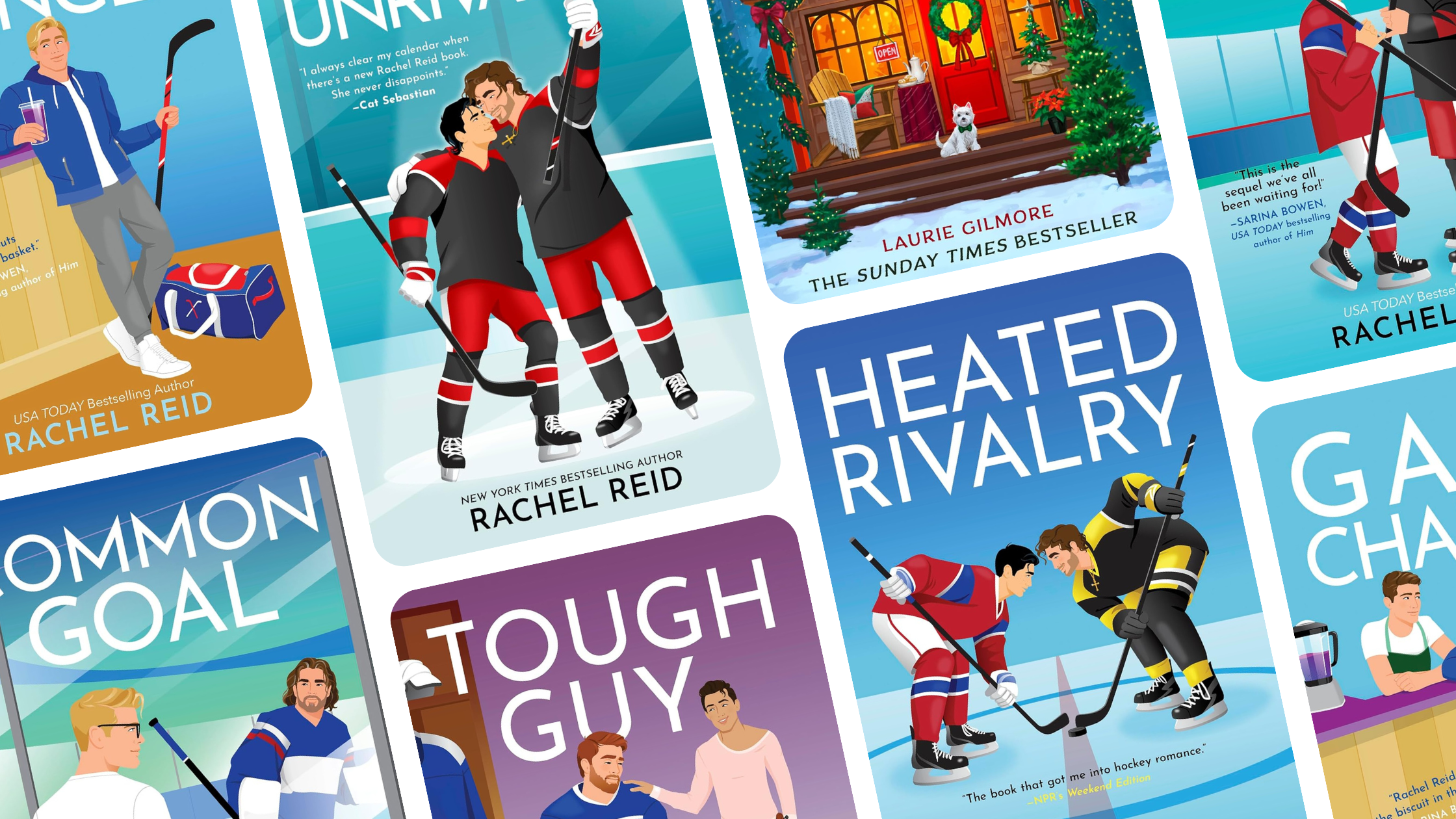

I’d read about Rachel Reid’s Game Changers series back in 2024, where books like Heated Rivalry focus on queer hockey romances, lots of heart, and definitely lots of heat. This is my honest reaction to the Heated Rivalry and the other Game Changer books, along with their show adaptation. Here’s my take on what worked and what fell flat.
Additionally, I will discuss where I think Rachel Reid’s writing truly shines.
A Heated Rivalry TV Adaptation
Heated Rivalry by Rachel Reid is book two in the series that follows two NHL superstars locked in a very public rivalry. With layered storylines, complicated relationships, and ultra-competitiveness, this queer romance has shattered many glass ceilings in Hollywood. Think about it: when was the last time we saw two men in a relationship on television become mainstream pop culture? I can’t think of it—can you?

Heated Rivalry made its way to the most polarizing streaming service, HBO. Millions stumbled upon this romance, thinking it would be some cutesy series. However, what they got was a story that ticked several book lovers’ favorite genres, built on one of the most satisfying tropes out there: enemies to lovers.
A Summary of Heated Rivalry
They’re star players on rival NHL teams. They’re constantly compared, pitted against each other, and hyped up as bitter enemies. But behind all the chirping and big game moments is a very inconvenient truth: they’re obsessed with each other.
Meet Shane Hollander, the golden boy. He’s clean-cut, polite, and beloved by the media. Think “perfect franchise player” energy. Shane has the “perfect family” and is naturally talented. In contrast, he may seem boring next to Ilya, but his internal conflict—wanting to be perfect while quietly breaking all of his own rules—makes him quietly compelling.
Then there’s Ilya Rozanov, the trash-talking chaos gremlin. He’s cocky, outrageous, deeply sarcastic, and somehow still heartbreakingly vulnerable. Personally, I loved Ilya for being this hard-shelled Russian with a huge chip on his shoulder. At his core, Ilya wants acceptance and love.
His story captures the mental pressures of being in the spotlight and the ease with which he self-sabotages. Witnessing a grown man who carries a range of pressures yet walks the earth with humor and bold confidence is something I deeply admire.
He’s the standout for most readers, and I get why. Under the trash talk and swagger, he captures readers with his conflicting feelings about his family, his home country, and his sexuality. His story captures the mental pressures of being in the spotlight and how easy it is to self‑sabotage one’s success. To witness a grown man who carries a range of pressures yet walks the earth with self-deprecation, humor, and bold confidence is something I deeply admire. Where he might toe the line between confidence and arrogance, he finds his match, who is the opposite in all public ways, but in private, his equal.
Spice Level & Emotional Weight of Heated Rivalry
I’ll be honest – some parts of the book felt like they wouldn’t let up on the steamy, spicy parts, mainly because I wanted to get to know the characters better on an emotional level. I found this book to be steamier than Red, White and Royal Blue or Call Me by Your Name, but it’s definitely not like 50 Shades.
Would I Keep Reading Game Changers?
If you’re judging the entire Game Changers series off Heated Rivalry, the obvious question is: is the rest of the series worth it? In short, if you liked Heated Rivalry at all, there are definitely books in this series worth continuing for, and many readers rank Heated Rivalry as the emotional core of the whole thing.
Game Changers Series by Rachel Reid: Books, Order, and Premises

Game Changer (Book 1)
Trope: Celebrity/athlete & regular guy, coming out, age/experience gap (slight).
Premise: Pro hockey superstar Scott Hunter is deeply closeted, intensely private, and kind of emotionally stunted. He falls for Kip Grady, a smart, struggling advertising professional who accidentally meets Scott through work. Their relationship forces Scott to reconsider how much of himself he’s willing to hide and what he’s willing to risk for love.
Tone: Sweet, somewhat softer emotionally than later books, with a fairly gentle coming‑out arc.
Audiobook | Paperback | Kindle
Note: You become familiar with their storyline in the show.

Heated Rivalry (Book 2)
Tone: Intense, emotional, very character‑driven, with a long timeline.
Trope: Enemies‑to‑lovers, rivals‑to‑lovers, long‑term secret relationship.
Premise: NHL rivals Shane Hollander and Ilya Rozanov become secret lovers over the course of years, balancing fame, rivalry, mental health struggles, and the closet.

Tough Guy (Book 3)
Tone: Quieter, softer, more about recovery and mental health than big sports drama.
Trope: Second‑chance romance, gentle giant, mental health and anxiety rep.
Premise: Enforcer Ryan Price is a big, tough NHL player dealing with anxiety and a history of being used for his fists rather than his talent. He reconnects with Fabian Salah, a musician and former childhood crush. The story focuses on healing, boundaries, and finding safety in someone who sees you as more than a role.

Common Goal (Book 4)
Tone: More mature in some ways, dealing with aging, identity, and what comes after a long sports career.
Trope: Age gap, bi awakening, friends‑with‑benefits, slow‑burn.
Premise: Eric Bennett is a 41‑year‑old goalie facing the end of his career. He’s out but has never been in a serious relationship with a man. Kyle Swift is younger, flirty, and determined to help Eric explore his sexuality—starting with a casual friends‑with‑benefits arrangement. Predictably, feelings get involved.

Role Model (Book 5)
Tone: Surprisingly warm and hopeful, with a strong found‑family feel.
Trope: Grumpy/sunshine, reputation rehab, teammates‑to‑lovers.
Premise: Troy Barrett is a star player with a terrible reputation, having been linked to a toxic team culture and a scandal. He’s traded to a more progressive team and immediately clashes (and clicks) with Ilya’s teammate, Harris Drover, who is kind, sunny, and absolutely done with toxic behavior. Troy has to prove he can change, while also figuring out his sexuality and what kind of man he wants to be.

The Long Game (Book 6)
Trope: Established couple, long‑term relationship struggle, queer celebrity, sequel.
Premise: This is essentially Heated Rivalry, Part Two. We return to Ilya and Shane years after Heated Rivalry. Now they’re older, more public, and dealing with the realities of aging careers, injuries, media attention, and the pressures of protecting their relationship.
Tone: Emotional, bittersweet in places, but ultimately hopeful. This book is a big one for readers who fell hard for Shane and Ilya.

Time to Shine (Book 7)
Tone: A bit lighter and sweeter overall, but still carries the emotional DNA of the series.
Trope: Teammates, sunshine/cinnamon roll, hurt/comfort.
Premise: Focuses on friends/teammates of earlier characters. One is more chaotic and open-hearted, the other more guarded, with the story centering on support, trust, and navigating hockey culture together.
FAQs About Heated Rivalry and the Game Changers Series
Q: What is Heated Rivalry about?
Heated Rivalry is a queer hockey romance by Rachel Reid, following NHL superstars Shane Hollander and Ilya Rozanov. Publicly, they’re fierce rivals hyped by the media as enemies. Privately, they’ve been in a secret, years‑long relationship built on hook-ups, competition, emotional dependence, and eventually love.
Do I need to read Game Changer (Book 1) before Heated Rivalry?
You don’t have to. Each book in the Game Changers series focuses on a different couple and can stand alone. That said, reading in order gives you a better sense of the hockey world, recurring characters, and how the overall culture around the sport evolves.
What are the main tropes in Heated Rivalry?
Enemies‑to‑lovers / rivals‑to‑lovers
Long‑term secret relationship
Sports romance (NHL hockey)
Slow burn over several years
Closeted queerness and public vs. private lives
How spicy is Heated Rivalry?
It’s on the steamier side. The sex scenes are explicit, but they’re also very character‑driven and tied closely to Shane and Ilya’s emotional arc. If you like romance that balances high spice with heavy feelings, this will likely work for you.
Heated Rivalry a light, fluffy read?
Not really. While there’s a lot of humor and banter, the book digs into serious topics like mental health, loneliness, internalized shame, and the emotional cost of staying closeted in professional sports. It’s intense, emotional, and often angsty, with a hopeful payoff.
What themes does Heated Rivalry explore?
Major themes include:
Queerness in a hyper‑masculine, public arena
The closet and the cost of secrecy
Mental health and self‑destructive behavior
The gap between public image and private reality
Learning to choose love and authenticity over fear
Who is more popular with readers: Shane or Ilya?
Ilya tends to be the breakout favorite because he’s loud, messy, funny, and deeply vulnerable under the bravado. Shane is quieter but resonates with readers who connect with perfectionism, pressure, and the struggle to live up to everyone’s expectations. Their dynamic is what really wins people over.
Will I understand the show if I haven’t read the book?
Yes, you can follow the show on its own. However, the book offers much greater depth to Shane and Ilya’s internal struggles, backstories, and emotional growth. Many readers find that reading the book either before or alongside the show makes the adaptation hit harder.
How does the Heated Rivalry book compare to the show?
A: In broad strokes:
• Book: Deeper internal monologue, slower emotional build, a long timeline, and more nuanced exploration of queerness, secrecy, and mental health.
• Show: Strong visuals, on‑ice energy, body language, chemistry you can see, and the tension of cameras, media, and public image.
Most people feel the book offers a more complete emotional story, while the show brings the rivalry and attraction to life through physicality.
Does the show change a lot from the book?
Some details and timelines are compressed for pacing. A few side characters and quieter moments from the book are reduced or combined. The core dynamic—rivalry, chemistry, secrecy, and long‑term connection—remains, but some internal nuance from the novel is simplified on screen.
What is the premise of each book in the Game Changers series?
• Game Changer (Book 1): Closeted NHL star Scott Hunter falls for Kip Grady, an ad professional. A gentler, sweeter coming‑out romance.
• Heated Rivalry (Book 2): NHL rivals Shane Hollander and Ilya Rozanov navigate a years‑long secret relationship under intense media scrutiny.
• Tough Guy (Book 3): Enforcer Ryan Price, who struggles with anxiety and feeling used for his fists, reconnects with musician and former crush Fabian Salah. Healing and mental health‑focused.
• Common Goal (Book 4): Veteran goalie Eric Bennett, nearing the end of his career, explores his attraction to men with the help of younger, flirty Kyle Swift in a friends‑with‑benefits setup that turns serious.
• Role Model (Book 5): Disgraced player Troy Barrett tries to rebuild his reputation on a new, more progressive team and falls for kind, principled Harris Drover. Grumpy/sunshine and redemption.
• The Long Game (Book 6): A direct follow‑up to Heated Rivalry, revisiting Shane and Ilya years later as they juggle aging careers, publicity, and protecting their relationship.
• Time to Shine (Book 7): A sweeter, teammates‑to‑lovers story focusing on newer characters connected to the existing hockey world, with strong themes of support and found family.
Which books are considered fan favorites in the series?
Based on reader rankings and recommendation lists, the most commonly named favorites are:
• Heated Rivalry (Book 2) – Often ranked #1 for emotional intensity and the rivals‑to‑lovers arc.
• The Long Game (Book 6) – The essential follow‑up that deepens and completes Shane and Ilya’s story.
• Role Model (Book 5) – Frequently praised for character growth and the grumpy/sunshine dynamic.
Game Changer (Book 1) is also widely recommended as a soft, accessible entry into the series.
Do I have to read the whole series, or can I pick and choose?
You can absolutely pick and choose. Each book focuses on a different couple with a self‑contained romance. If you’re primarily in it for Shane and Ilya, you can read Heated Rivalry and then jump straight to The Long Game. If a particular trope—like grumpy/sunshine or second‑chance romance—appeals more, you can start there.
If I loved Heated Rivalry, which book should I read next?
Most readers recommend going straight to The Long Game (Book 6), since it continues Shane and Ilya’s story and shows the long‑term consequences of their choices. After that, you can branch out based on mood:
• For healing and mental health focus → Tough Guy.
• For a redemption arc and grumpy/sunshine → Role Model.
• For a softer intro to the universe → Game Changer.
Is the series worth continuing if I only really loved Heated Rivalry?
If Heated Rivalry is what grabbed you, at minimum yes, read The Long Game. It’s widely considered the emotional companion and payoff to Heated Rivalry. Whether you continue beyond that depends on how much you enjoy the overall mix of hockey, queer romance, and emotional character work in the rest of the series.
Which version feels more “definitive”—the Heated Rivalry book or the show?
For most people, the book feels like the definitive version because it offers deeper internal conflict, a richer long‑term arc, and more nuanced handling of queerness and mental health. The show is a powerful companion that visually amplifies the rivalry, chemistry, and public pressure. Together, they create the fullest picture of Shane and Ilya’s story.
What other books should you read if you liked Heated Rivalry?
Try the Maple Hill Series. It’s a feisty hockey romance series. Or if you’re looking for sports dramas with beautiful love stories, try an author like Mariana Zapata.
Final Thoughts on Heated Rivalry
In conclusion, Heated Rivalry showcases an intense blend of romance and rivalry that resonates with readers. It raises important questions about identity and acceptance in professional sports.
For those who enjoyed Heated Rivalry, exploring the broader themes of the Game Changers series is highly recommended.
Discover more from READ YOUR PAIGE
Subscribe to get the latest posts sent to your email.